

-
21 corrective maintenance
- техническое обслуживание с устранением неисправностей
- техническое обслуживание
- текущий ремонт
- корректирующее техническое обслуживание
- корректирующее обслуживание
- восстановительное техническое обслуживание
- внеплановое техническое обслуживание
внеплановое техническое обслуживание
—
[А.С.Гольдберг. Англо-русский энергетический словарь. 2006 г.]Тематики
EN
восстановительное техническое обслуживание
—
[ http://slovarionline.ru/anglo_russkiy_slovar_neftegazovoy_promyishlennosti/]Тематики
EN
корректирующее обслуживание
—
[ http://www.iks-media.ru/glossary/index.html?glossid=2400324]Тематики
- электросвязь, основные понятия
EN
корректирующее техническое обслуживание
корректирующее ТО
Техническое обслуживание, проводимое после обнаружения отказа с целью возвращения объекта в работоспособное состояние.
[ОСТ 45.152-99 ]EN
corrective maintenance
Параллельные тексты EN-RU
Maintenance actions carried out to restore a defective item to a specified condition.
[Dictionary of Military and Associated Terms. US Department of Defense 2005]Maintenance is the combination of all technical and administrative measures intended to keep equipment in, or restore it to a state in which it can required function.
Maintenance comprises:
-
scheduled maintenance carried out in accordance with an established schedule and as a function of the number of operating cycles,
-
corrective maintenance carried out after fault recognition and intended to put an item into a state in which it can perform a required function.
Техническое обслуживание представляет собой сочетание технических и административных мер, направленных на поддержание оборудования в исправном состоянии, обеспечивающим выполнение заданных функций.
Техническое обслуживание включает в себя:
-
плановое техническое, обслуживание, выполняемое в соответствии с установленным графиком в зависимости от числа выполненных коммутационных циклов,
-
корректирующее техническое обслуживание, выполняемое после обнаружения отказа с целью возвращения КРУЭ в работоспособное состояние.
Тематики
- тех. обсл. и ремонт средств электросвязи
Обобщающие термины
Синонимы
EN
текущий ремонт
Ремонт, состоящий в замене и/или восстановлении отдельных составных частей.
Примечание
Текущий ремонт является неплановым техническим обслуживанием, постановка объектов на который осуществляется без предварительного назначения и который проводится на месте эксплуатации.
[ОСТ 45.152-99]
текущий ремонт
Ремонт, выполняемый для обеспечения или восстановления работоспособности изделия и состоящий в замене и (или) восстановлении отдельных частей
[ ГОСТ 18322-78]
[СТО Газпром РД 2.5-141-2005]
текущий ремонт
Ндп. малый ремонт
мелкий ремонт
Ремонт, выполняемый для обеспечения или восстановления работоспособности изделия и состоящий в замене и (или) восстановлении отдельных частей.
Примечание. Капитальный, средний и текущий ремонты могут быть плановыми и неплановыми.
Под базовой частью понимают основную часть изделия, предназначенную для его компоновки и установки других составных частей.
[ ГОСТ 18322-78]Недопустимые, нерекомендуемые
Тематики
- газораспределение
- система техн. обслуж. и ремонта техники
- тех. обсл. и ремонт средств электросвязи
Обобщающие термины
EN
- corrective maintenance
- current maintenance
- current repair
- current repairs
- light repair
- maintenance
- maintenance overhaul
- maintenance work
- maintenance works
- minor repairs
- operating repair
- permanent repair
- permanent repairs
- remedial works
- routine overhaul
- routine repair
- routine repairs
- routine servicing
- running maintenance
- running repair
- running repairs
- servicing
техническое обслуживание
Ндп. профилактическое обслуживание
технический уход
техническое содержание
По ГОСТ 18322-78
[ ГОСТ 20375-83]
техническое обслуживание
Ндп. профилактическое обслуживание
технический уход
Комплекс операций или операция по поддержанию работоспособности или исправности изделия при использовании по назначению, ожидании, хранении и транспортировании
Техническое обслуживание содержит регламентированные в конструкторской документации операции для поддержания работоспособности или исправности изделия в течение его срока службы.
Под операцией технического обслуживания в соответствии с ГОСТ 3.1109-82 понимают законченную часть технического обслуживания составной части изделия, выполняемую на одном рабочем месте исполнителем определенной специальности.
Под транспортированием понимают операцию перемещения груза по определенному маршруту от места погрузки до места разгрузки или перегрузки. В транспортирование самоходных изделий не включается их перемещение своим ходом.
Под ожиданием понимают нахождение изделия в состоянии готовности к использованию по назначению.
В техническое обслуживание могут входить мойка изделия, контроль его технического состояния, очистка, смазывание, крепление болтовых соединений, замена некоторых составных частей изделия (например, фильтрующих элементов), регулировка и т. д.
[ ГОСТ 18322-78]
[ПОТ Р М-016-2001]
[РД 153-34.0-03.150-00]
техническое обслуживание
Комплекс операций или операция по поддержанию работоспособности или исправности изделия (технического устройства) при использовании по назначению, ожидании, хранении и транспортировании
[ПБ 12-529-03 Правила безопасности систем газораспределения и газопотребления, утверждены постановлением Госгортехнадзора России от 18. 03. 2003 №9]
[СТО Газпром РД 2.5-141-2005]Недопустимые, нерекомендуемые
Тематики
- газораспределение
- система техн. обслуж. и ремонта техники
- электроагрегаты генераторные
- электробезопасность
EN
- backup
- concept maintenance
- corrective maintenance
- engineering service
- field service
- handling
- maintaining
- maintenance
- maintenance element
- maintenance facilities
- maintenance service
- maintenance support
- maintenance work
- maintenance works
- service
- servicing
- technical service
- technical services
- technical servicing
DE
техническое обслуживание с устранением неисправностей
—
[А.С.Гольдберг. Англо-русский энергетический словарь. 2006 г.]Тематики
EN
Англо-русский словарь нормативно-технической терминологии > corrective maintenance
-
22 isolating
разъединение (функция)
Действие, направленное на отключение питания всей установки или ее отдельной части путем отделения этой установки или части ее от любого источника электрической энергии по соображениям безопасности.
[ ГОСТ Р 50030. 1-2000 ( МЭК 60947-1-99)]
разъединение
Действие, предназначенное для отключения в целях безопасности питания всей электрической установки или ее части при помощи отделения ее от всех источников электрической энергии.
[ ГОСТ Р МЭК 60050-826-2009]
Функция разъединения состоит в том, чтобы обеспечить безопасность персонала перед выполнением работы, ремонта, определения места повреждения или замены оборудования
[ ГОСТ Р 50571. 1-2009 ( МЭК 60364-1: 2005)]EN
isolation
function intended to make dead for reasons of safety all or a discrete section of the electrical installation by separating the electrical installation or section from every source of electric energy
[IEV number 826-17-01]FR
sectionnement, m
Параллельные тексты EN-RU
fonction destinée à assurer la mise hors tension de tout ou partie d'une installation électrique en séparant l'installation électrique ou une partie de l'installation électrique, de toute source d'énergie électrique, pour des raisons de sécurité
[IEV number 826-17-01]Compact CVS circuit breakers are suitable for Isolation as defined in EC standards 60947-2. The aim of isolation is to separate a circuit or apparatus from the remainder of a system which is energized in order the personnel may carry out work on the isolated part with complete safety.
[Schneider Electric]Автоматический выключатель CVS пригоден к разъединению - функции, определенной в европейском стандарте 60947-2. Целью разъединения является отделение цепей или аппаратов от части системы, остающейся под напряжением для обеспечения полной безопасности персонала, работающего на отделенной части системы.
[Перевод Интент]When the supply disconnecting device is one of the types specified in 5.3.2 a) to d) it shall fulfil all of the following requirements:
– have a visible contact gap or a position indicator which cannot indicate OFF (isolated) until all contacts are actually open and the requirements for the isolating function have been satisfied;
...
[IEC 60204-1-2006]Аппараты отключения электропитания, указанные в п. 5.3.2, в перечислениях а)...d), должны удовлетворять всем перечисленным ниже требованиям:
- иметь видимый изоляционный промежуток между разомкнутыми контактами или указатель коммутационного положения, который указывает на положение ОТКЛЮЧЕНО (отделено) только в том случае, если все контакты аппарата разомкнуты и все остальные требования, относящиеся к функции разъединения, выполнены;
...
[Перевод Интент]Тематики
- выключатель автоматический
- выключатель, переключатель
- электробезопасность
- электроустановки
Близкие понятия
Синонимы
EN
DE
- Trennen, n
FR
- sectionnement, m
Англо-русский словарь нормативно-технической терминологии > isolating
-
23 isolate
- разобщать
- развязывать (цепи)
- отключать от сети
- отделять, отделение
- изолят (микроорганизма)
- изолировать
изолировать
-
[IEV number 151-15-36]EN
insulate, verb
prevent electric conduction between conductive elements by means of insulating materials
[IEV number 151-15-36]FR
isoler (1), verbe
empêcher la conduction électrique entre des éléments conducteurs au moyen d'isolants
[IEV number 151-15-36]изолировать
-
[IEV number 151-15-38]EN
isolate (2), verb
provide, by separation, a specified degree of protection from any live electric circuit
[IEV number 151-15-38]FR
isoler (3), verbe
assurer, par séparation, un degré de protection spécifié par rapport à tout circuit électrique sous tension
[IEV number 151-15-38]Тематики
EN
- insulate, verb
- isolate
DE
FR
- isoler (1), verbe
изолят (микроорганизма)
Культуры вирусов или других микробов, изолированные из какого-либо конкретного материала.
[Англо-русский глоссарий основных терминов по вакцинологии и иммунизации. Всемирная организация здравоохранения, 2009 г.]Тематики
- вакцинология, иммунизация
EN
отделять
Полностью отсоединять устройство или электрическую цепь от других устройств или электрических цепей.
[Перевод Интент]
изолировать
-
[IEV number 151-15-37]EN
isolate (1), verb
disconnect completely a device or an electric circuit from other devices or electric circuits
[IEV number 151-15-37]FR
isoler (2), verbe
déconnecter complètement un dispositif ou un circuit électrique d'autres dispositifs ou circuits électriques
[IEV number 151-15-37]461.1 В зависимости от предназначенной ему функции любое устройство, предназначенное для отделения, отключения или управления, должно соответствовать требованиям стандартов и технических условий на эти устройства.
461.2 В системах TNС нулевой рабочий проводник, совмещенный с защитным, отделять или отключать не следует. В системе TNS отделять или отключать рабочий нулевой проводник не требуется.
Во всех системах распределения электроэнергии отделять или отключать защитные проводники не допускается.
461.3 Мероприятия, приведенные в настоящем стандарте, не заменяют меры защиты, установленные в других стандартах на электроустановки зданий.
462 Отделение
462.1 В каждой цепи должна быть предусмотрена возможность отделения каждого проводника от питающих проводников, находящихся под напряжением, за исключением упомянутых в 461.2.
Допускается предусматривать отделение группы цепей общим устройством, если это позволяют условия эксплуатации.
[ ГОСТ Р 50571. 7-94 ( МЭК 364-4-46-81)]Параллельные тексты EN-RU
When the supply disconnecting device is one of the types specified in 5.3.2 a) to d) it shall fulfil all of the following requirements:
– isolate the electrical equipment from the supply and have one OFF (isolated) and one ON position marked with "O" and "I" …;
...
[IEC 60204-1-2006]Аппараты отключения электропитания, указанные в п. 5.3.2, в перечислениях а)...d), должны удовлетворять всем перечисленным ниже требованиям:
- отделять электрооборудование от источника питания и иметь одно положение ОТКЛЮЧЕНО (отделенное положение) и одно положение ВКЛЮЧЕНО, обозначенные символами «О» и «I» соответственно...;
...
[Перевод Интент]isolation
function intended to make dead for reasons of safety all or a discrete section of the electrical installation by separating the electrical installation or section from every source of electric energy
[IEV number 826-17-01]разъединение (функция)
Действие, направленное на отключение питания всей установки или ее отдельной части путем отделения этой установки или части ее от любого источника электрической энергии по соображениям безопасности.
[ ГОСТ Р 50030. 1-2000 ( МЭК 60947-1-99)]Compact CVS circuit breakers are suitable for Isolation as defined in EC standards 60947-2. The aim of isolation is to separate a circuit or apparatus from the remainder of a system which is energized in order the personnel may carry out work on the isolated part with complete safety.
[Schneider Electric]Автоматический выключатель CVS пригоден к разъединению - функции, определенной в европейском стандарте 60947-2. Целью разъединения является отделение цепей или аппаратов от части системы, остающейся под напряжением для обеспечения полной безопасности персонала, работающего на отделенной части системы.
[Перевод Интент]
Тематики
EN
FR
отключать от сети
-
[Интент]Электродвигатель должен быть немедленно (аварийно) отключен от сети в следующих случаях:...
[Правила эксплуатации электроустановок потребителей]Коммутационные аппараты в цепях электродвигателей должны отключать от сети одновременно все проводники, находящиеся под напряжением.
[ПУЭ]Тематики
EN
развязывать (цепи)
—
[Я.Н.Лугинский, М.С.Фези-Жилинская, Ю.С.Кабиров. Англо-русский словарь по электротехнике и электроэнергетике, Москва, 1999 г.]Тематики
- электротехника, основные понятия
EN
разобщать
изолировать
отделять
выделят ь
отключать
—
[ http://slovarionline.ru/anglo_russkiy_slovar_neftegazovoy_promyishlennosti/]Тематики
Синонимы
EN
Англо-русский словарь нормативно-технической терминологии > isolate
-
24 probability
ˌprɔbəˈbɪlɪtɪ сущ.
1) возможное, осуществимое, правдоподобное His return to power was discussed openly as a probability. ≈ Его возвращение к власти открыто обсуждалось как вполне вероятное. in all probability ≈ по всей вероятности, по всей видимости Syn: likelihood
2) вероятность (некоторого события - в математическом смысле, или близком к нему) There is not much probability of his retirement ≈ Его отставка не слишком вероятна. There is little probability that he will succeed ≈ Маловероятно, что он преуспеет. There is a strong probability that the problem will recur if we do not solve it now ≈ Есть большая вероятность, что эта проблема вновь встанет, если не решить ее сейчас
3) вероятность реализоваться, шанс What are our probabilities? ≈ Каковы наши шансы? вероятность - calculus /calculation/ of * (математика) теория вероятностей - conditional /transition(al) / * (математика) условная вероятность - absolute * безусловная вероятность - a priory * априорная вероятность - * function( математика) вероятностная функция - in all * по всей вероятности - there is every * of success можно почти не сомневаться в успехе - what are the probabilities? насколько это вероятно? - the * is that he won't come скорее всего, он не придет - there is a strong * that... весьма /очень даже/ вероятно, что... правдоподобность;
правдоподобие - reports devoid of all * сообщения, лишенные всякого правдоподобия a posteriori ~ апостериорная вероятность absolute ~ безусловная вероятность basic theorems of ~ основные теоремы теории вероятностей conditional ~ условная вероятность conditional ~ density плотность условного распределения confidence ~ доверительная вероятность corrected ~ скорректированная вероятность cumulative ~ накопленная вероятность empiric ~ эмпирическая вероятность empirical ~ эмпирическая вероятность estimated ~ оценка вероятности finite ~ конечная вероятность probability вероятность;
in all probability по всей вероятности inverse ~ обратная вероятность math ~ теоретическая вероятность mathematical ~ теоретическая вероятность objective ~ объективная вероятность prior ~ априорная вероятность probability вероятность;
in all probability по всей вероятности ~ вероятность ~ правдоподобие ~ density function плотность вероятности ~ of customer loss вероятность потери требования ~ of damage вероятность ущерба ~ of loss вероятность потери ~ of loss or damage вероятность убытков или ущерба ~ of no-arrivals вероятность отсутствия требований ~ of rejection вероятность отклонения specified ~ заданная вероятность stationary ~ стационарная вероятность steady-state ~ установившееся значение вероятности true ~ истинная вероятность unconditional ~ безусловная вероятность variable ~ переменная вероятность zero ~ нулевая вероятностьБольшой англо-русский и русско-английский словарь > probability
-
25 behavior
1. поведение; режим2. поведение; линия поведения; характер изменения3. поведение; работаСинонимический ряд:1. conduct (noun) actions; bearing; carriage; comportment; conduct; course of action; demeanor; deportment; manner; manners; poise; tenue2. function (noun) adaptation; adjustment; function; functioning; operation; performance; reaction; response -
26 fault
- ток повреждения
- сверхток
- сброс
- сбой
- разлом
- повреждение (цепи, линии, устройства)
- повреждение (во взрывозащите)
- повреждение
- ошибка
- отказ
- ненормальный режим работы
- неисправность
- неисправное состояние
- нарушение
- короткое замыкание
- дизъюктивное нарушение
- дефект
- выход из строя
- аварийное сообщение
аварийное сообщение
-Параллельные тексты EN-RU
The system offers diagnostic and statistics functions and configurable warnings and faults, allowing better prediction of component maintenance, and provides data to continuously improve the entire system.
[Schneider Electric]Система (управления электродвигателем) предоставляет оператору различную диагностическую и статистическую информацию и позволяет сконфигурировать предупредительные и аварийные сообщения, что дает возможность лучше планировать техническое обслуживание и постоянно улучшать систему в целом.
[Перевод Интент]Various alarm notifications are available to indicate a compromised security state such as forced entry and door position.
[APC]Устройство может формировать различные аварийные сообщения о нарушении защиты, например, о несанкционированном проникновении или об изменении положения двери.
[Перевод Интент]
Тематики
EN
выход из строя
—
[Я.Н.Лугинский, М.С.Фези-Жилинская, Ю.С.Кабиров. Англо-русский словарь по электротехнике и электроэнергетике, Москва, 1999 г.]
выход системы из строя
вследствие отказа аппаратного или программного обеспечения либо средств связи
[Англо-русский толковый словарь терминов и сокращений по ВТ, Интернету и программированию. © 1998-2007 гг., Э.М. Пройдаков, Л.А. Теплицкий. 13,8 тыс. статей.]
выход из строя
-
[Интент]Единичные выходы из строя в процессе испытаний элементов электронной техники (микросхем, электровакуумных и полупроводниковых приборов, конденсаторов, резисторов, кварцевых резонаторов и т.д.), а также ламп накаливания и предохранителей не могут служить основанием для прекращения испытаний, если это не вызвано недостатком конструкции прибора.
При повторных выходах из строя тех же элементов испытания следует считать неудовлетворительными.
[ ГОСТ 24314-80]При выходе из строя отдельно стоящих вентиляторов на двигателях мельниц, дымососов, мельничных вентиляторов, вентиляторов первичного воздуха и т.д. необходимо при первой возможности, но не позже чем его допускается заводской инструкцией, отключить двигатель 6 кВ для ремонта вентилятора охлаждения двигателя.
[РД 34.20.565]Судовая электрическая сеть, предназначенная для передачи электроэнергии при выходе из строя линий электропередачи силовой сети или исчезновении напряжения
[ ГОСТ 22652-77]Тематики
Синонимы
EN
дизъюктивное нарушение
Относительное перемещение частей пластов вдоль плоскости их разрыва (геол.)
[ http://slovarionline.ru/anglo_russkiy_slovar_neftegazovoy_promyishlennosti/]Тематики
EN
короткое замыкание
Случайное или намеренное соединение резистором или импедансом со сравнительно низким сопротивлением двух или более точек в цепи, нормально находящихся под различным напряжением.
Случайное или намеренное низкоимпедансное или низкоомное соединение двух или более точек электрической цепи, нормально находящихся под разными электрическими потенциалами. (вариант компании Интент)
МЭК 60050(151-03-41) [2].
[ ГОСТ Р 50030. 1-2000 ( МЭК 60947-1-99)]
короткое замыкание
Случайный или преднамеренный проводящий путь между двумя или более проводящими частями, принуждающий различия электрических потенциалов между этими проводящими частями становиться равными или близкими к нулю.
Короткое замыкание обычно возникает в аварийном режиме электроустановки здания при повреждении изоляции токоведущих частей, находящихся под разными электрическими потенциалами, и возникновении между этими частями электрического контакта, имеющего пренебрежимо малое полное сопротивление. Короткое замыкание также может быть следствием ошибочных действий, совершаемых персоналом при монтаже и эксплуатации электроустановки здания, когда соединяют между собой проводящие части, которые в нормальном режиме находятся под разными электрическими потенциалами.
Короткое замыкание характеризуется током короткого замыкания, который, многократно превышая номинальный ток электрической цепи, может вызвать возгорание её элементов и явиться причиной пожара в здании. Поэтому в электроустановках зданий всегда проводят мероприятия, направленные на снижение вероятности возникновения короткого замыкания, а также выполняют защиту от короткого замыкания с помощью устройств защиты от сверхтока.
[ http://www.volt-m.ru/glossary/letter/%CA/view/27/]
короткое замыкание
Случайное или преднамеренное соединение двух или более проводящих частей, вызывающее снижение разности электрических потенциалов между этими частями до нуля или значения, близкого к нулю.
[ ГОСТ Р МЭК 60050-195-2005]
короткое замыкание
КЗ
замыкание, при котором токи в ветвях электроустановки, примыкающих к месту его возникновения, резко возрастают, превышая наибольший допустимый ток продолжительного режима
[Методические указания по защите распределительных электрических сетей напряжением 0,4-10 кВ от грозовых перенапряжений]EN
short-circuit
accidental or intentional conductive path between two or more conductive parts forcing the electric potential differences between these conductive parts to be equal to or close to zero
Source: 151-03-41 MOD
[IEV number 195-04-11]FR
court-circuit
chemin conducteur accidentel ou intentionnel entre deux ou plusieurs parties conductrices forçant les différences de potentiel électriques entre ces parties conductrices à être nulles ou proches de zéro
Source: 151-03-41 MOD
[IEV number 195-04-11]Параллельные тексты EN-RU
A short-circuit is a low impedance connection between two conductors at different voltages.
[ABB]Короткое замыкание представляет собой низкоомное соединение двух проводников, находящихся под разными потенциалами.
[Перевод Интент]Тематики
- электробезопасность
- электротехника, основные понятия
Синонимы
- КЗ
EN
DE
FR
нарушение
[Департамент лингвистических услуг Оргкомитета «Сочи 2014». Глоссарий терминов]EN
fault
Another term for offense.
[Департамент лингвистических услуг Оргкомитета «Сочи 2014». Глоссарий терминов]
Тематики
EN
неисправное состояние
Состояние объекта, при котором он не соответствует хотя бы одному из требований нормативно-технической и (или) конструкторской (проектной) документации.
[ ГОСТ 27.002-89]
[ОСТ 45.152-99]
неисправное состояние
неисправность
По ГОСТ 13377-75
[ ГОСТ 24166-80]
неисправное состояние
Состояние системы тревожной сигнализации, препятствующее реагированию системы на наличие опасности в соответствии с требованиями стандартов.
[ ГОСТ Р 50775-95]
[МЭК 839-1-1-88]Тематики
- надежность, основные понятия
- ремонт судов
- системы охраны и безопасности
- тех. обсл. и ремонт средств электросвязи
Обобщающие термины
Синонимы
EN
DE
FR
неисправность
отказ в работе
Состояние машины, характеризующееся неспособностью выполнять заданную функцию, исключая случаи проведения профилактического технического обслуживания, других запланированных действий или недостаток внешних ресурсов (например, отключение энергоснабжения).
Примечание 1
Неисправность часто является результатом повреждения самой машины, однако она может иметь место и без повреждения.
Примечание 2
На практике термины «неисправность», «отказ» и «повреждение» часто используются как синонимы.
[ ГОСТ Р ИСО 12100-1:2007]
неисправность
Состояние оборудования, характеризуемое его неспособностью выполнять требуемую функцию, исключая профилактическое обслуживание или другие планово-предупредительные действия, а также исключая неспособность выполнять требуемую функцию из-за недостатка внешних ресурсов.
Примечание - Неисправность часто является следствием отказа самого оборудования, но может существовать и без предварительного отказа.
[ГОСТ ЕН 1070-2003]
неисправность
Состояние технического объекта (элемента), характеризуемое его неспособностью выполнять требуемую функцию, исключая периоды профилактического технического обслуживания или другие планово-предупредительные действия, или в результате недостатка внешних ресурсов.
Примечания
1 Неисправность является часто следствием отказа самого технического объекта, но может существовать и без предварительного отказа.
2 Английский термин «fault» и его определение идентичны данному в МЭК 60050-191 (МЭС 191-05-01) [1]. В машиностроении чаще применяют французский термин «defaut» или немецкий термин «Fehler», чем термины «panne» и «Fehlzusstand», которые употребляют с этим определением.
[ ГОСТ Р ИСО 13849-1-2003]Тематики
EN
- abnormality
- abort
- abortion
- breakage
- breakdown
- bug
- defect
- disease
- disrepair
- disturbance
- fail
- failure
- failure occurrence
- fault
- faultiness
- fouling
- health problem
- layup
- malfunction
- problem
- shutdown
- trouble
DE
FR
ненормальный режим работы электротехнического изделия
Режим работы электротехнического изделия (электротехнического устройства, электрооборудования), при котором значение хотя бы одного из параметров режима выходит за пределы наибольшего или наименьшего рабочего значения.
[ ГОСТ 18311-80]
К ненормальным относятся режимы, связанные с отклонениями от допустимых значений величин тока, напряжения и частоты, опасные для оборудования или устойчивой работы энергосистемы.
Рассмотрим наиболее характерные ненормальные режимы.а) Перегрузка оборудования, вызванная увеличением тока сверх номинального значения. Номинальным называется максимальный ток, допускаемый для данного оборудования в течение неограниченного времени.
Если ток, проходящий по оборудованию, превышает номинальное значение, то за счет выделяемого им дополнительного тепла температура токоведущих частей и изоляции через некоторое время превосходит допустимую величину, что приводит к ускоренному износу изоляции и ее повреждению. Время, допустимое для прохождения повышенных токов, зависит от их величины. Характер этой зависимости показан на рис. 1-3 и определяется конструкцией оборудования и типом изоляционных материалов. Для предупреждения повреждения оборудования при его перегрузке необходимо принять меры к разгрузке или отключению оборудования.б) Качания в системах возникают при выходе из синхронизма работающих параллельно генераторов (или электростанций) А и В (рис. 1-2, б). При качаниях в каждой точке системы происходит периодическое изменение («качание») тока и напряжения. Ток во всех элементах сети, связывающих вышедшие из синхронизма генераторы А и В, колеблется от нуля до максимального значения, во много раз превышающего нормальную величину. Напряжение падает от нормального до некоторого минимального значения, имеющего разную величину в каждой точке сети. В точке С, называемой электрическим центром качаний, оно снижается до нуля, в остальных точках сети напряжение падает, но остается больше нуля, нарастая от центра качания С к источникам питания А и В. По характеру изменения тока и напряжения качания похожи на к. з. Возрастание тока вызывает нагревание оборудования, а уменьшение напряжения нарушает работу всех потребителей системы. Качание — очень опасный ненормальный режим, отражающийся на работе всей энергосистемы.
в) Повышение напряжения сверх допустимого значения возникает обычно на гидрогенераторах при внезапном отключении их нагрузки. Разгрузившийся гидрогенератор увеличивает частоту вращения, что вызывает возрастание э. д. с. статора до опасных для его изоляции значений. Защита в таких случаях должна снизить ток возбуждения генератора или отключить его.
Опасное для изоляции оборудования повышение напряжения может возникнуть также при одностороннем отключении или включении длинных линий электропередачи с большой емкостной проводимостью.
Кроме отмеченных ненормальных режимов, имеются и другие, ликвидация которых возможна при помощи релейной защиты.[Чернобровов Н. В. Релейная защита. Учебное пособие для техникумов]
Тематики
- изделие электротехническое
- релейная защита
- электротехника, основные понятия
Синонимы
EN
отказ
Нарушение способности оборудования выполнять требуемую функцию.
Примечания
1. После отказа оборудование находится в неисправном состоянии.
2. «Отказ» является событием, в отличие от «неисправности», которая является состоянием.
3. Это понятие, как оно определено, не применяют коборудованиюобъекту, состоящему только из программных средств.
4. На практике термины «отказ» и «неисправность» часто используют как синонимы.
[ГОСТ ЕН 1070-2003]
[ ГОСТ Р ИСО 13849-1-2003]
[ ГОСТ Р МЭК 60204-1-2007]
отказ
Событие, заключающееся в нарушении работоспособного состояния объекта.
[ ГОСТ 27.002-89]
[ОСТ 45.153-99]
[СТО Газпром РД 2.5-141-2005]
[СО 34.21.307-2005]
отказ
Событие, заключающееся в нарушении работоспособного состояния машины и (или) оборудования вследствие конструктивных нарушений при проектировании, несоблюдения установленного процесса производства или ремонта, невыполнения правил или инструкций по эксплуатации.
[Технический регламент о безопасности машин и оборудования]EN
failure
the termination of the ability of an item to perform a required function
NOTE 1 – After failure the item has a fault.
NOTE 2 – "Failure" is an event, as distinguished from "fault", which is a state.
NOTE 3 – This concept as defined does not apply to items consisting of software only.
[IEV number 191-04-01]
NOTE 4 - In practice, the terms fault and failure are often used synonymously
[IEC 60204-1-2006]FR
défaillance
cessation de l'aptitude d'une entité à accomplir une fonction requise
NOTE 1 – Après défaillance d'une entité, cette entité est en état de panne.
NOTE 2 – Une défaillance est un passage d'un état à un autre, par opposition à une panne, qui est un état.
NOTE 3 – La notion de défaillance, telle qu'elle est définie, ne s'applique pas à une entité constituée seulement de logiciel.
[IEV number 191-04-01]Тематики
- безопасность в целом
- безопасность гидротехнических сооружений
- безопасность машин и труда в целом
- газораспределение
- надежность средств электросвязи
- надежность, основные понятия
Обобщающие термины
EN
DE
FR
повреждение
Повреждение любого элемента, разделения, изоляции или соединения между элементами, не являющихся неповреждаемыми по МЭК 60079-11 [8], при проведении испытаний на искробезопасность.
[ ГОСТ Р МЭК 60050-426-2006]
Тематики
EN
повреждение (цепи, линии, устройства)
-
[Интент]Тематики
- выключатель автоматический
- релейная защита
- электротехника, основные понятия
EN
разлом
—
[ http://www.eionet.europa.eu/gemet/alphabetic?langcode=en]EN
fault
A fracture or a zone of fractures along which there has been displacement of the sides relative to one another parallel to the fracture. (Source: BJGEO)
[http://www.eionet.europa.eu/gemet/alphabetic?langcode=en]Тематики
EN
DE
FR
сбой
Самоустраняющийся отказ или однократный отказ, устраняемый незначительным вмешательством оператора.
[ ГОСТ 27.002-89]
[ОСТ 45.153-99]
[СТО Газпром РД 2.5-141-2005]
сбой
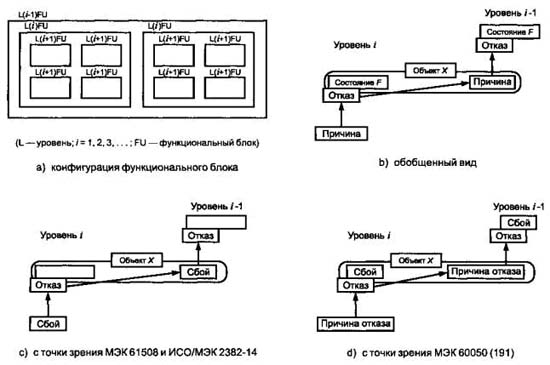
Ненормальный режим, который может вызвать уменьшение или потерю способности функционального блока выполнять требуемую функцию.
Примечание
МЭС 191-05-01 определяет «сбой» как состояние, характеризуемое неспособностью выполнить необходимую функцию, исключая неспособности, возникающие во время профилактического ухода или других плановых мероприятий, либо в результате недостатка внешних ресурсов. Иллюстрация к этим двум точкам зрения показана на рисунке [ ИСО / МЭК 2382-14-01-10].
[ ГОСТ Р МЭК 61508-4-2007]Тематики
- газораспределение
- надежность средств электросвязи
- надежность, основные понятия
Обобщающие термины
EN
сброс
Разрывное нарушение, при котором сместитель падает в сторону опущенного крыла (висячее крыло опущено относительно лежачего).
[ Словарь геологических терминов и понятий. Томский Государственный Университет]Тематики
- геология, геофизика
Обобщающие термины
EN
сверхток
Любой ток, превышающий номинальный
МЭК 60050(441-11-06).
[ ГОСТ Р 50030. 1-2000 ( МЭК 60947-1-99)]
[ ГОСТ Р 50345-99( МЭК 60898-95)]
сверхток
Электрический ток, превышающий номинальный электрический ток.
Сверхток представляет собой любой электрический ток, величина которого превышает номинальный ток какого-либо элемента электроустановки здания или используемого в ней электрооборудования, например: номинальный ток электрической цепи, допустимый длительный ток проводника, номинальный ток автоматического выключателя и т. д. В нормативной и правовой документации различают два основных вида сверхтока – ток перегрузки и ток короткого замыкания.
Появление сверхтока в каком-либо элементе электроустановки здания может привести к его перегреву, возгоранию и, как следствие, к возникновению пожара в здании. Поэтому в электроустановках зданий выполняют защиту от сверхтока.
[ http://www.volt-m.ru/glossary/letter/%D1/view/59/]
сверхток
сверхток в электротехническом изделии
Ток, значение которого превосходит наибольшее рабочее значение тока электротехнического изделия (устройства).
[ ГОСТ 18311-80]
сверхток
Электрический ток, превышающий номинальный электрический ток.
Примечание - Для проводников номинальный ток считается равным длительному допустимому току.
[ ГОСТ Р МЭК 60050-826-2009]
Сверхток может оказывать или может не оказывать вредные воздействия в зависимости от его величины и продолжительности. Сверхтоки могут возникать в результате перегрузок в электроприемниках или при повреждениях, таких как короткие замыкания или замыканиях на землю
[ ГОСТ Р 50571. 1-2009 ( МЭК 60364-1: 2005)]
сверхток
Любой ток, превышающий номинальное значение. Для проводов номинальным значением является допустимый ток.
[ ГОСТ Р МЭК 60204-1-2007]EN
overcurrent
electric current exceeding the rated electric current
NOTE – For conductors, the rated current is considered as equal to the current-carrying capacity
[IEV number 826-11-14]
over-current
<>current exceeding the rated current
<>[IEC 61095, ed. 2.0 (2009-02)]
over-current
electric current the value of which exceeds a specified limiting value
[IEV number 151-15-28]
[IEV number 442-01-20]FR
surintensité, f
courant électrique supérieur au courant électrique assigné
NOTE – Pour des conducteurs, on considère que le courant assigné est égal au courant admissible.
[IEV number 826-11-14]
surintensité
courant supérieur au courant assigné
[IEC 61095, ed. 2.0 (2009-02)]
[IEV number 442-01-20]
surintensité, f
courant électrique dont la valeur dépasse une valeur limite spécifiée
[IEV number 151-15-28]Параллельные тексты EN-RU The design of LV installations leads to basic protection devices being fitted for three types of faults:
-
overloads
-
short-circuits
-
insulation faults
Низковольтные электроустановки должны быть оснащены устройствами защиты трех типов:
-
от перегрузки;
-
от короткого замыкания;
- от токов утечки.
[Перевод Интент]
Примечание.
Слово fault в данном случае пришлось опустить, поскольку:
- его нельзя перевести как "неисправность", т. к. возникновение перегрузки ( overload) не является неисправностью;
- его нельзя перевести как "сверхток", т. к. ток утечки не является сверхтоком.The chosen switchgear must withstand and eliminate faults at optimised cost with respect to the necessary performance.
[Schneider Electric]Выбранная аппаратура распределения должна иметь такие характеристики, чтобы рентабельно выдерживать и ограничивать сверхтоки.
[Перевод Интент]Тематики
Синонимы
EN
DE
FR
ток повреждения
Ток, возникающий в результате пробоя или перекрытия изоляции.
[ ГОСТ Р 51321. 1-2000 ( МЭК 60439-1-92)]
ток повреждения
Ток, который протекает через данную точку повреждения в результате повреждения изоляции.
[ ГОСТ Р МЭК 60050-826-2009]EN
fault current
current resulting from an insulation failure, the bridging of insulation or incorrect connection in an electrical circuit
[IEC 61439-1, ed. 2.0 (2011-08)]
fault current
current which flows across a given point of fault resulting from an insulation fault
[IEV number 826-11-11]FR
courant de défaut
courant résultant d'un défaut de l'isolation, du contournement de l’isolation ou d’un raccordement incorrect dans un circuit électrique
[IEC 61439-1, ed. 2.0 (2011-08)]
courant de défaut, m
courant s'écoulant en un point de défaut donné, consécutivement à un défaut de l'isolation
[IEV number 826-11-11]Тематики
EN
DE
- Fehlerstrom, m
FR
- courant de défaut, m
3.7.2 повреждение (fault): Повреждение любого элемента, разделения, изоляции или соединения между элементами, не являющимися по настоящему стандарту не повреждаемыми, от которых зависит искробезопасность цепи.
Источник: ГОСТ Р 52350.11-2005: Электрооборудование для взрывоопасных газовых сред. Часть 11. Искробезопасная электрическая цепь "I" оригинал документа
3.16 неисправность (fault): Состояние объекта, характеризующееся неспособностью исполнять требуемую функцию, исключая время профилактического технического обслуживания или других запланированных действий, или простои из-за недостатка внешних ресурсов
Примечание - Неисправность часто является результатом отказа объекта, но может существовать и без отказа.
Источник: ГОСТ Р 51901.6-2005: Менеджмент риска. Программа повышения надежности оригинал документа
3.6 неисправность (fault): Состояние элемента, характеризующееся неспособностью исполнять требуемую функцию, исключая период технического обслуживания, ремонта или других запланированных действий, а также из-за недостатка внешних ресурсов.
Примечание - Неисправность часто является результатом отказа элемента, но может существовать и без предшествующего отказа.
Источник: ГОСТ Р 51901.5-2005: Менеджмент риска. Руководство по применению методов анализа надежности оригинал документа
3.5 неисправность (fault): Состояние объекта, когда один из его элементов или группа элементов проявляют признаки деградации или нарушения работы, что может привести к отказу машины.
Примечания
1 Неисправность часто является следствием отказа, но может иметь место и при его отсутствии.
2 Состояние объекта не рассматривают как неисправное, если оно возникло вследствие запланированных процедур или нехватки внешних ресурсов.
Источник: ГОСТ Р ИСО 13379-2009: Контроль состояния и диагностика машин. Руководство по интерпретации данных и методам диагностирования оригинал документа
3.3 неисправность (fault): Состояние объекта, при котором он не способен выполнять требуемую функцию, за исключением такой неспособности при техническом обслуживании или других плановых мероприятиях или вследствие нехватки внешних ресурсов.
Примечания
1 Неисправность часто является следствием отказа объекта, но может иметь место и без него.
2 В настоящем стандарте термин «неисправность» используется наряду с термином «отказ» по историческим причинам.
Источник: ГОСТ Р 51901.12-2007: Менеджмент риска. Метод анализа видов и последствий отказов оригинал документа
3.1.30 ошибка (fault): Разность между погрешностью весоизмерительного датчика и основной погрешностью весоизмерительного датчика (см. 3.1.34).
Источник: ГОСТ Р 8.726-2010: Государственная система обеспечения единства измерений. Датчики весоизмерительные. Общие технические требования. Методы испытаний оригинал документа
3.6 дефект (fault): Неисправность или ошибка в компоненте технического обеспечения, программного обеспечения или системы
[МЭК 61513, пункт 3.22]
Примечание 1 - Дефекты могут подразделяться на случайные, например, в результате ухудшения аппаратных средств из-за старения, и систематические, например, ошибки в программном обеспечении, которые вытекают из погрешностей проектирования.
Примечание 2 - Дефект (в особенности дефект проекта) может остаться необнаруженным в системе до тех пор, пока не окажется, что полученный результат не соответствует намеченной функции, то есть возникает отказ.
Примечание 3 - См. также «ошибка программного обеспечения» и «случайный дефект».
Источник: ГОСТ Р МЭК 62340-2011: Атомные станции. Системы контроля и управления, важные для безопасности. Требования по предотвращению отказов по общей причине оригинал документа
3.2 неисправность (fault): Состояние объекта, когда один из его элементов или группа элементов проявляет признаки деградации или нарушения работы, что может привести к отказу машины.
Примечание - Неисправность может привести к отказу.
Источник: ГОСТ Р ИСО 17359-2009: Контроль состояния и диагностика машин. Общее руководство по организации контроля состояния и диагностирования оригинал документа
3.17 дефект (fault): Неисправность или ошибка в компоненте технического обеспечения, программного обеспечения или системы.
[МЭК 61513, пункт 3.22]
Источник: ГОСТ Р МЭК 60880-2010: Атомные электростанции. Системы контроля и управления, важные для безопасности. Программное обеспечение компьютерных систем, выполняющих функции категории А оригинал документа
3.6.1 сбой (fault): Ненормальный режим, который может вызвать уменьшение или потерю способности функционального блока выполнять требуемую функцию.
Примечание - МЭС 191-05-01 определяет «сбой» как состояние, характеризуемое неспособностью выполнить необходимую функцию, исключая неспособности, возникающие во время профилактического ухода или других плановых мероприятий, либо в результате недостатка внешних ресурсов. Иллюстрация к этим двум точкам зрения показана на рисунке 4 [ИСО/МЭК 2382-14-01-10].
Источник: ГОСТ Р МЭК 61508-4-2007: Функциональная безопасность систем электрических, электронных, программируемых электронных, связанных с безопасностью. Часть 4. Термины и определения оригинал документа
3.22 дефект (fault): Дефект в аппаратуре, программном обеспечении или в компоненте системы (см. рисунок 3).
Примечание 1 -Дефекты могут быть результатом случайных отказов, которые возникают, например, из-за деградации аппаратуры в результате старения; возможны систематические дефекты, например, в результате дефектов в программном обеспечении, возникающих из-за ошибок при проектировании.
Примечание 2 - Дефект (особенно дефекты, связанные с проектированием) может оставаться незамеченным, пока сохраняются условия, при которых он не отражается на выполнении функции, т.е. пока не произойдет отказ.
Примечание 3 - См. также «дефект программного обеспечения».
Источник: ГОСТ Р МЭК 61513-2011: Атомные станции. Системы контроля и управления, важные для безопасности. Общие требования оригинал документа
4.10.1 ошибка (fault): Разность между погрешностью показаний и погрешностью прибора.
Источник: ГОСТ Р ЕН 1434-1-2011: Теплосчетчики. Часть 1. Общие требования
Англо-русский словарь нормативно-технической терминологии > fault
-
27 time delay
- задержка срабатывания
- задержка (в электронно-лучевой трубке)
- задержка
- выдержка времени
- время задержки
- временная задержка
время задержки
—
[Интент]Параллельные тексты EN-RU
The relay remains energized for the duration of the timer.
[Schneider Electric]Реле остается включенным до истечения времени задержки.
[Перевод Интент]
Тематики
- электротехника, основные понятия
EN
выдержка времени
(в реле времени)
[Интент]Параллельные тексты EN-RU
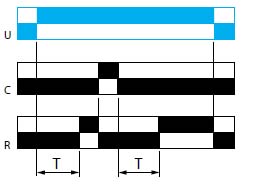
The timing period T starts on energization.
At the end of the timing period T, the output R closes.
Closing of the control contact C makes the output R open.
Opening of control contact C restarts timing period T.
At the end of the timing period T, the output R closes.
[Schneider Electric]Отсчет выдержки времени T начинается от момента подачи питания на реле времени.
По окончании выдержки T выход R замыкается.
При подаче напряжения на управляющий вход C выход R размыкается.
В момент снятия напряжения с управляющего входа C вновь начинается отсчет выдержки T.
По окончании отсчета выдержки времени T выход R замыкается.
[Перевод Интент]
Тематики
Сопутствующие термины
- начало отсчета выдержки времени
- окончание выдержки времени
- отсчет выдержки времени
- прерывание отсчета выдержки времени
EN
временная задержка
запаздывание
фиксированная задержка
заданная задержка
—
[Л.Г.Суменко. Англо-русский словарь по информационным технологиям. М.: ГП ЦНИИС, 2003.]
задержка
-
[Интент]
задержка
запаздывание
-
[Лугинский Я. Н. и др. Англо-русский словарь по электротехнике и электроэнергетике. 2-е издание - М.: РУССО, 1995 - 616 с.]Тематики
Синонимы
EN
задержка
запаздывание
Период времени, который требуется для вывода изображения на экран электронно-лучевой трубки, в течение которого его не видно. Это вызвано эффектом послесвечения люминофора.
[ http://www.morepc.ru/dict/]Тематики
Синонимы
EN
задержка срабатывания
-
[Интент]Параллельные тексты EN-RU
As implemented in the LTM R controller, all motor protection function trip time delays are definite time, except for the Thermal Overload function, which also offers inverse thermal trip time delays.
[Schneider Electric]Применительно к контроллеру LTM R, все задержки срабатывания защиты электродвигателя являются фиксированными, кроме функции защиты от перегрузки, определяемой по тепловому состоянию, которая может использовать и обратнозависимые задержки срабатывания.
[Перевод Интент]When the overfluxing value exceeds this threshold the P63x will determine the tripping time according to the overfluxing magnitude value and the set characteristic.
[Schneider Electric]Если значение перевозбуждения становится выше заданного предельного значения, то устройство P63x определяет задержку срабатывания в зависимости от значения перевозбуждения и заданной характеристики.
[Перевод Интент]
Тематики
- автоматизация, основные понятия
- выключатель автоматический
- релейная защита
EN
Англо-русский словарь нормативно-технической терминологии > time delay
-
28 value
1) (числовое) значение ( физической величины), величина; показатель, число2) оценка || оценивать3) значимость; ценность4) стоимость5) мн. ч. горн. содержание компонента в руде•value in terms of the unite of length and time — значение, выраженное в единицах длины и времени;to assign a value — приписывать значение;to assume a value — принимать значение;to attribute a value — приписывать значение;to improve a value — уточнять значение; повышать точность значения;to insert numerical values in an equation — подставлять числовые значения в уравнение;to predetermine [prescribe, preset\] a value — задавать значение;to read value off the scale — считывать показания по шкале;to revise [verify\] a value — уточнять значение-
AA value
-
Abbe value
-
absolute biological value
-
absolute value
-
acceptance value
-
accepted value
-
access value
-
acetyl value
-
acid value
-
actual octane value
-
actual value
-
adjusted value
-
adopted value
-
antiknock value
-
apparent biological value
-
approved value
-
approximate value
-
arbitrary value
-
ash value
-
assay value
-
assessed value
-
assigned value
-
asymptotic value
-
attrition value
-
available heating value
-
average value
-
baking value
-
base value
-
bearing value
-
blending octane value
-
blending value
-
bogey value
-
boundary value
-
bromine value
-
buffer value
-
calculated value
-
calibrated value
-
calibration value
-
caloric value
-
calorific value
-
carbonyl value
-
Cauchy principal value
-
cementing value
-
center-line-average value
-
certified value
-
cetane value
-
characteristic value
-
cla value
-
clear blending value
-
closeness value
-
coagulation value
-
coke value
-
color value
-
combustion value
-
commercial value
-
common value
-
complement value
-
component values
-
computed value
-
conservative value
-
constant value
-
conventional value
-
corrected value
-
corrosion value
-
crest value
-
critical value
-
current value
-
cutting value
-
datum value
-
decision value
-
default value
-
delivery value
-
design value
-
dietary value
-
digestive value
-
distillation value
-
dot value
-
drop-out value
-
effective value
-
eigen value
-
energy value
-
equilibrium value
-
Erichsen value
-
ester value
-
expectation value
-
experimental value
-
exposure value
-
extrapolated value
-
extreme value
-
fiducial value
-
finite value
-
flash value
-
food value
-
full-scale value
-
F-value
-
GC value
-
gloss value
-
gross calorific value
-
guess value
-
heating value
-
heat value
-
heating value as fired
-
high heat value
-
higher calorific value
-
holding value
-
imaginary value
-
improved value
-
indicated value
-
information value
-
inhibiting value
-
initial value
-
instantaneous value
-
integral value
-
intermediate value
-
internationally recommended value
-
inverse value
-
iodine value
-
item value
-
knock value
-
Koettstorfer value
-
least-squares adjusted value
-
least-squares value
-
legitimate value
-
limiting value
-
limit value
-
limiting dynamic value
-
local mean value
-
low heat value
-
lower calorific value
-
lower-range value
-
maximax value
-
maximum scale value
-
mean value
-
mean-square value
-
measured value
-
metallurgical value
-
milling value
-
minimum scale value
-
momentary value
-
NC value
-
net calorific value
-
net energy value
-
nominal value
-
normalized value
-
numerical value
-
nutritive value
-
observed value
-
octane value
-
open-circuit values
-
operating value
-
original value
-
oxygen value
-
part-program value
-
peak value
-
peak-to-peak value
-
peak-to-valley value
-
performance value
-
physical value
-
pickup value
-
place value
-
potential gum value
-
predetermined value
-
predicted value
-
preferred value
-
prestored value
-
principal value
-
proper value
-
quantization value
-
rank value
-
rated value
-
rated withstand value
-
rating value
-
real value
-
rectified value
-
reduced value
-
reduction value
-
reference value
-
refined value
-
refining value
-
regulatory value
-
resetting value
-
reset value
-
resultant value
-
returning value
-
revised value
-
rms value
-
rough value
-
roughness value
-
rounded-off value
-
saponification value
-
saturation value
-
scale-division value
-
second-hand value
-
setting value
-
set value
-
short-circuit values
-
short-time average value
-
soak value
-
spatial value
-
specific value
-
specified value
-
standard value
-
starting value
-
steady-state value
-
successive values
-
superheat value
-
survival value
-
tabulated value
-
target value
-
temporal value
-
test value
-
threshold value
-
toluene value
-
tone value
-
tool offset value
-
torsion value
-
total heating value
-
tristimulus values
-
true biological value
-
true food value
-
true value
-
typical value
-
unit value
-
unrounded value
-
upper-range value
-
U-value
-
value of argument
-
value of error
-
value of function
-
value of variable
-
variable value
-
virtual decision value
-
virtual value
-
V-notch Charpy value
-
weighted average value
-
weighted value
-
working value -
29 near cash
!гос. фин. The resource budget contains a separate control total for “near cash” expenditure, that is expenditure such as pay and current grants which impacts directly on the measure of the golden rule.This paper provides background information on the framework for the planning and control of public expenditure in the UK which has been operated since the 1998 Comprehensive Spending Review (CSR). It sets out the different classifications of spending for budgeting purposes and why these distinctions have been adopted. It discusses how the public expenditure framework is designed to ensure both sound public finances and an outcome-focused approach to public expenditure.The UK's public spending framework is based on several key principles:"consistency with a long-term, prudent and transparent regime for managing the public finances as a whole;" "the judgement of success by policy outcomes rather than resource inputs;" "strong incentives for departments and their partners in service delivery to plan over several years and plan together where appropriate so as to deliver better public services with greater cost effectiveness; and"the proper costing and management of capital assets to provide the right incentives for public investment.The Government sets policy to meet two firm fiscal rules:"the Golden Rule states that over the economic cycle, the Government will borrow only to invest and not to fund current spending; and"the Sustainable Investment Rule states that net public debt as a proportion of GDP will be held over the economic cycle at a stable and prudent level. Other things being equal, net debt will be maintained below 40 per cent of GDP over the economic cycle.Achievement of the fiscal rules is assessed by reference to the national accounts, which are produced by the Office for National Statistics, acting as an independent agency. The Government sets its spending envelope to comply with these fiscal rules.Departmental Expenditure Limits ( DEL) and Annually Managed Expenditure (AME)"Departmental Expenditure Limit ( DEL) spending, which is planned and controlled on a three year basis in Spending Reviews; and"Annually Managed Expenditure ( AME), which is expenditure which cannot reasonably be subject to firm, multi-year limits in the same way as DEL. AME includes social security benefits, local authority self-financed expenditure, debt interest, and payments to EU institutions.More information about DEL and AME is set out below.In Spending Reviews, firm DEL plans are set for departments for three years. To ensure consistency with the Government's fiscal rules departments are set separate resource (current) and capital budgets. The resource budget contains a separate control total for “near cash” expenditure, that is expenditure such as pay and current grants which impacts directly on the measure of the golden rule.To encourage departments to plan over the medium term departments may carry forward unspent DEL provision from one year into the next and, subject to the normal tests for tautness and realism of plans, may be drawn down in future years. This end-year flexibility also removes any incentive for departments to use up their provision as the year end approaches with less regard to value for money. For the full benefits of this flexibility and of three year plans to feed through into improved public service delivery, end-year flexibility and three year budgets should be cascaded from departments to executive agencies and other budget holders.Three year budgets and end-year flexibility give those managing public services the stability to plan their operations on a sensible time scale. Further, the system means that departments cannot seek to bid up funds each year (before 1997, three year plans were set and reviewed in annual Public Expenditure Surveys). So the credibility of medium-term plans has been enhanced at both central and departmental level.Departments have certainty over the budgetary allocation over the medium term and these multi-year DEL plans are strictly enforced. Departments are expected to prioritise competing pressures and fund these within their overall annual limits, as set in Spending Reviews. So the DEL system provides a strong incentive to control costs and maximise value for money.There is a small centrally held DEL Reserve. Support from the Reserve is available only for genuinely unforeseeable contingencies which departments cannot be expected to manage within their DEL.AME typically consists of programmes which are large, volatile and demand-led, and which therefore cannot reasonably be subject to firm multi-year limits. The biggest single element is social security spending. Other items include tax credits, Local Authority Self Financed Expenditure, Scottish Executive spending financed by non-domestic rates, and spending financed from the proceeds of the National Lottery.AME is reviewed twice a year as part of the Budget and Pre-Budget Report process reflecting the close integration of the tax and benefit system, which was enhanced by the introduction of tax credits.AME is not subject to the same three year expenditure limits as DEL, but is still part of the overall envelope for public expenditure. Affordability is taken into account when policy decisions affecting AME are made. The Government has committed itself not to take policy measures which are likely to have the effect of increasing social security or other elements of AME without taking steps to ensure that the effects of those decisions can be accommodated prudently within the Government's fiscal rules.Given an overall envelope for public spending, forecasts of AME affect the level of resources available for DEL spending. Cautious estimates and the AME margin are built in to these AME forecasts and reduce the risk of overspending on AME.Together, DEL plus AME sum to Total Managed Expenditure (TME). TME is a measure drawn from national accounts. It represents the current and capital spending of the public sector. The public sector is made up of central government, local government and public corporations.Resource and Capital Budgets are set in terms of accruals information. Accruals information measures resources as they are consumed rather than when the cash is paid. So for example the Resource Budget includes a charge for depreciation, a measure of the consumption or wearing out of capital assets."Non cash charges in budgets do not impact directly on the fiscal framework. That may be because the national accounts use a different way of measuring the same thing, for example in the case of the depreciation of departmental assets. Or it may be that the national accounts measure something different: for example, resource budgets include a cost of capital charge reflecting the opportunity cost of holding capital; the national accounts include debt interest."Within the Resource Budget DEL, departments have separate controls on:"Near cash spending, the sub set of Resource Budgets which impacts directly on the Golden Rule; and"The amount of their Resource Budget DEL that departments may spend on running themselves (e.g. paying most civil servants’ salaries) is limited by Administration Budgets, which are set in Spending Reviews. Administration Budgets are used to ensure that as much money as practicable is available for front line services and programmes. These budgets also help to drive efficiency improvements in departments’ own activities. Administration Budgets exclude the costs of frontline services delivered directly by departments.The Budget preceding a Spending Review sets an overall envelope for public spending that is consistent with the fiscal rules for the period covered by the Spending Review. In the Spending Review, the Budget AME forecast for year one of the Spending Review period is updated, and AME forecasts are made for the later years of the Spending Review period.The 1998 Comprehensive Spending Review ( CSR), which was published in July 1998, was a comprehensive review of departmental aims and objectives alongside a zero-based analysis of each spending programme to determine the best way of delivering the Government's objectives. The 1998 CSR allocated substantial additional resources to the Government's key priorities, particularly education and health, for the three year period from 1999-2000 to 2001-02.Delivering better public services does not just depend on how much money the Government spends, but also on how well it spends it. Therefore the 1998 CSR introduced Public Service Agreements (PSAs). Each major government department was given its own PSA setting out clear targets for achievements in terms of public service improvements.The 1998 CSR also introduced the DEL/ AME framework for the control of public spending, and made other framework changes. Building on the investment and reforms delivered by the 1998 CSR, successive spending reviews in 2000, 2002 and 2004 have:"provided significant increase in resources for the Government’s priorities, in particular health and education, and cross-cutting themes such as raising productivity; extending opportunity; and building strong and secure communities;" "enabled the Government significantly to increase investment in public assets and address the legacy of under investment from past decades. Departmental Investment Strategies were introduced in SR2000. As a result there has been a steady increase in public sector net investment from less than ¾ of a per cent of GDP in 1997-98 to 2¼ per cent of GDP in 2005-06, providing better infrastructure across public services;" "introduced further refinements to the performance management framework. PSA targets have been reduced in number over successive spending reviews from around 300 to 110 to give greater focus to the Government’s highest priorities. The targets have become increasingly outcome-focused to deliver further improvements in key areas of public service delivery across Government. They have also been refined in line with the conclusions of the Devolving Decision Making Review to provide a framework which encourages greater devolution and local flexibility. Technical Notes were introduced in SR2000 explaining how performance against each PSA target will be measured; and"not only allocated near cash spending to departments, but also – since SR2002 - set Resource DEL plans for non cash spending.To identify what further investments and reforms are needed to equip the UK for the global challenges of the decade ahead, on 19 July 2005 the Chief Secretary to the Treasury announced that the Government intends to launch a second Comprehensive Spending Review (CSR) reporting in 2007.A decade on from the first CSR, the 2007 CSR will represent a long-term and fundamental review of government expenditure. It will cover departmental allocations for 2008-09, 2009-10 and 2010 11. Allocations for 2007-08 will be held to the agreed figures already announced by the 2004 Spending Review. To provide a rigorous analytical framework for these departmental allocations, the Government will be taking forward a programme of preparatory work over 2006 involving:"an assessment of what the sustained increases in spending and reforms to public service delivery have achieved since the first CSR. The assessment will inform the setting of new objectives for the decade ahead;" "an examination of the key long-term trends and challenges that will shape the next decade – including demographic and socio-economic change, globalisation, climate and environmental change, global insecurity and technological change – together with an assessment of how public services will need to respond;" "to release the resources needed to address these challenges, and to continue to secure maximum value for money from public spending over the CSR period, a set of zero-based reviews of departments’ baseline expenditure to assess its effectiveness in delivering the Government’s long-term objectives; together with"further development of the efficiency programme, building on the cross cutting areas identified in the Gershon Review, to embed and extend ongoing efficiency savings into departmental expenditure planning.The 2007 CSR also offers the opportunity to continue to refine the PSA framework so that it drives effective delivery and the attainment of ambitious national standards.Public Service Agreements (PSAs) were introduced in the 1998 CSR. They set out agreed targets detailing the outputs and outcomes departments are expected to deliver with the resources allocated to them. The new spending regime places a strong emphasis on outcome targets, for example in providing for better health and higher educational standards or service standards. The introduction in SR2004 of PSA ‘standards’ will ensure that high standards in priority areas are maintained.The Government monitors progress against PSA targets, and departments report in detail twice a year in their annual Departmental Reports (published in spring) and in their autumn performance reports. These reports provide Parliament and the public with regular updates on departments’ performance against their targets.Technical Notes explain how performance against each PSA target will be measured.To make the most of both new investment and existing assets, there needs to be a coherent long term strategy against which investment decisions are taken. Departmental Investment Strategies (DIS) set out each department's plans to deliver the scale and quality of capital stock needed to underpin its objectives. The DIS includes information about the department's existing capital stock and future plans for that stock, as well as plans for new investment. It also sets out the systems that the department has in place to ensure that it delivers its capital programmes effectively.This document was updated on 19 December 2005.Near-cash resource expenditure that has a related cash implication, even though the timing of the cash payment may be slightly different. For example, expenditure on gas or electricity supply is incurred as the fuel is used, though the cash payment might be made in arrears on aquarterly basis. Other examples of near-cash expenditure are: pay, rental.Net cash requirement the upper limit agreed by Parliament on the cash which a department may draw from theConsolidated Fund to finance the expenditure within the ambit of its Request forResources. It is equal to the agreed amount of net resources and net capital less non-cashitems and working capital.Non-cash cost costs where there is no cash transaction but which are included in a body’s accounts (or taken into account in charging for a service) to establish the true cost of all the resourcesused.Non-departmental a body which has a role in the processes of government, but is not a government public body, NDPBdepartment or part of one. NDPBs accordingly operate at arm’s length from governmentMinisters.Notional cost of a cost which is taken into account in setting fees and charges to improve comparability with insuranceprivate sector service providers.The charge takes account of the fact that public bodies donot generally pay an insurance premium to a commercial insurer.the independent body responsible for collecting and publishing official statistics about theUK’s society and economy. (At the time of going to print legislation was progressing tochange this body to the Statistics Board).Office of Government an office of the Treasury, with a status similar to that of an agency, which aims to maximise Commerce, OGCthe government’s purchasing power for routine items and combine professional expertiseto bear on capital projects.Office of the the government department responsible for discharging the Paymaster General’s statutoryPaymaster General,responsibilities to hold accounts and make payments for government departments and OPGother public bodies.Orange bookthe informal title for Management of Risks: Principles and Concepts, which is published by theTreasury for the guidance of public sector bodies.Office for NationalStatistics, ONS60Managing Public Money————————————————————————————————————————"GLOSSARYOverdraftan account with a negative balance.Parliament’s formal agreement to authorise an activity or expenditure.Prerogative powerspowers exercisable under the Royal Prerogative, ie powers which are unique to the Crown,as contrasted with common-law powers which may be available to the Crown on the samebasis as to natural persons.Primary legislationActs which have been passed by the Westminster Parliament and, where they haveappropriate powers, the Scottish Parliament and the Northern Ireland Assembly. Begin asBills until they have received Royal Assent.arrangements under which a public sector organisation contracts with a private sectorentity to construct a facility and provide associated services of a specified quality over asustained period. See annex 7.5.Proprietythe principle that patterns of resource consumption should respect Parliament’s intentions,conventions and control procedures, including any laid down by the PAC. See box 2.4.Public Accountssee Committee of Public Accounts.CommitteePublic corporationa trading body controlled by central government, local authority or other publiccorporation that has substantial day to day operating independence. See section 7.8.Public Dividend finance provided by government to public sector bodies as an equity stake; an alternative to Capital, PDCloan finance.Public Service sets out what the public can expect the government to deliver with its resources. EveryAgreement, PSAlarge government department has PSA(s) which specify deliverables as targets or aimsrelated to objectives.a structured arrangement between a public sector and a private sector organisation tosecure an outcome delivering good value for money for the public sector. It is classified tothe public or private sector according to which has more control.Rate of returnthe financial remuneration delivered by a particular project or enterprise, expressed as apercentage of the net assets employed.Regularitythe principle that resource consumption should accord with the relevant legislation, therelevant delegated authority and this document. See box 2.4.Request for the functional level into which departmental Estimates may be split. RfRs contain a number Resources, RfRof functions being carried out by the department in pursuit of one or more of thatdepartment’s objectives.Resource accountan accruals account produced in line with the Financial Reporting Manual (FReM).Resource accountingthe system under which budgets, Estimates and accounts are constructed in a similar wayto commercial audited accounts, so that both plans and records of expenditure allow in fullfor the goods and services which are to be, or have been, consumed – ie not just the cashexpended.Resource budgetthe means by which the government plans and controls the expenditure of resources tomeet its objectives.Restitutiona legal concept which allows money and property to be returned to its rightful owner. Ittypically operates where another person can be said to have been unjustly enriched byreceiving such monies.Return on capital the ratio of profit to capital employed of an accounting entity during an identified period.employed, ROCEVarious measures of profit and of capital employed may be used in calculating the ratio.Public Privatepartnership, PPPPrivate Finance Initiative, PFIParliamentaryauthority61Managing Public Money"————————————————————————————————————————GLOSSARYRoyal charterthe document setting out the powers and constitution of a corporation established underprerogative power of the monarch acting on Privy Council advice.Second readingthe second formal time that a House of Parliament may debate a bill, although in practicethe first substantive debate on its content. If successful, it is deemed to denoteParliamentary approval of the principle of the proposed legislation.Secondary legislationlaws, including orders and regulations, which are made using powers in primary legislation.Normally used to set out technical and administrative provision in greater detail thanprimary legislation, they are subject to a less intense level of scrutiny in Parliament.European legislation is,however,often implemented in secondary legislation using powers inthe European Communities Act 1972.Service-level agreement between parties, setting out in detail the level of service to be performed.agreementWhere agreements are between central government bodies, they are not legally a contractbut have a similar function.Shareholder Executive a body created to improve the government’s performance as a shareholder in businesses.Spending reviewsets out the key improvements in public services that the public can expect over a givenperiod. It includes a thorough review of departmental aims and objectives to find the bestway of delivering the government’s objectives, and sets out the spending plans for the givenperiod.State aidstate support for a domestic body or company which could distort EU competition and sois not usually allowed. See annex 4.9.Statement of Excessa formal statement detailing departments’ overspends prepared by the Comptroller andAuditor General as a result of undertaking annual audits.Statement on Internal an annual statement that Accounting Officers are required to make as part of the accounts Control, SICon a range of risk and control issues.Subheadindividual elements of departmental expenditure identifiable in Estimates as single cells, forexample cell A1 being administration costs within a particular line of departmental spending.Supplyresources voted by Parliament in response to Estimates, for expenditure by governmentdepartments.Supply Estimatesa statement of the resources the government needs in the coming financial year, and forwhat purpose(s), by which Parliamentary authority is sought for the planned level ofexpenditure and income.Target rate of returnthe rate of return required of a project or enterprise over a given period, usually at least a year.Third sectorprivate sector bodies which do not act commercially,including charities,social and voluntaryorganisations and other not-for-profit collectives. See annex 7.7.Total Managed a Treasury budgeting term which covers all current and capital spending carried out by the Expenditure,TMEpublic sector (ie not just by central departments).Trading fundan organisation (either within a government department or forming one) which is largely orwholly financed from commercial revenue generated by its activities. Its Estimate shows itsnet impact, allowing its income from receipts to be devoted entirely to its business.Treasury Minutea formal administrative document drawn up by the Treasury, which may serve a wide varietyof purposes including seeking Parliamentary approval for the use of receipts asappropriations in aid, a remission of some or all of the principal of voted loans, andresponding on behalf of the government to reports by the Public Accounts Committee(PAC).62Managing Public Money————————————————————————————————————————GLOSSARY63Managing Public MoneyValue for moneythe process under which organisation’s procurement, projects and processes aresystematically evaluated and assessed to provide confidence about suitability, effectiveness,prudence,quality,value and avoidance of error and other waste,judged for the public sectoras a whole.Virementthe process through which funds are moved between subheads such that additionalexpenditure on one is met by savings on one or more others.Votethe process by which Parliament approves funds in response to supply Estimates.Voted expenditureprovision for expenditure that has been authorised by Parliament. Parliament ‘votes’authority for public expenditure through the Supply Estimates process. Most expenditureby central government departments is authorised in this way.Wider market activity activities undertaken by central government organisations outside their statutory duties,using spare capacity and aimed at generating a commercial profit. See annex 7.6.Windfallmonies received by a department which were not anticipated in the spending review.———————————————————————————————————————— -
30 CFC
1) Общая лексика: (Call forwarding on busy/don’t answer) перенаправление звонка по з (This service feature allows the called user to forward particular calls if the called user is busy or does not answer within a specified number of rings.), непрерывные функциональные с (в дополнение к стандартным языкам IEC 61131-3 это шестой язык программирования в интегрированном комплексе CoDeSys 2.3 (3S), а также других системах программирования приложений реального времени)2) Компьютерная техника: Compact Flash Card, Compact Flash Computer, Compressible Flow Computer Program3) Биология: capillary filtration coefficient4) Авиация: композиционный материал из углеродного волокна5) Спорт: Card Fighters Clash, Celtic Football Club, Chelsea Football Club, Colorado Football Conference, Cool For Cycling, Corvallis Fitness Center6) Военный термин: Canada Firearms Centre, Canadian Forces College, Centre des Armes ГГ Feu Canada, Combat Fighting Course, Combative Fighting Concepts, Combined Forces Command, Contract Finance Committee, Current Functional Capability, central fire control, complex facility console, consolidated freight classification, control flow chart, counterfire center, Combined Field Command (Korea), Combined Forces Command (ROK/US)7) Техника: C-band frequency converter, Combination Forecast Chalk, containment fan cooler, counter-flow-continuous chillers, crossed-film cryotron8) Шутливое выражение: Cook Flying Cars9) Религия: Christian Formation Committee, Communicators For Christ, Couples For Christ, Covenant Fellowship Church10) Юридический термин: Cash For Cartridges11) Бухгалтерия: контролируемая иностранная корпорация (controlled foreign corporation)12) Грубое выражение: Crazy For Cock, Crazy Fucking Cunt13) Оптика: chlorofluorocarbons14) Сокращение: Carbon Fibre Composite, Chloro-FluoroCarbon, Combined Forces Command (US-South Korea), Culler Facer Canceller (not colour facer canceller, UK Royal Mail)15) Университет: Contexts For Classics, Cy-Fair College16) Физиология: Catalyst For A Cure17) Вычислительная техника: Chloro-FluoroCarbon (Chemical)18) Нефть: chloro-fluoro carbon19) Биохимия: Colony Forming Cells20) Транспорт: Cheap Formula Continental, Chloro Fluoro Carbon, Combination Friction Clutch21) Пищевая промышленность: Cali Fried Chicken, California Fried Chicken22) Парфюмерия: хлорфторуглерод23) Фирменный знак: Cooperative Finance Corporation, The Chinese Food Connection24) Экология: chlorfluorcarbon26) Глоссарий компании Сахалин Энерджи: chloro-fluoro carbons27) Программирование: Continuous Function Charts28) Сахалин Ю: carbon fluoride compounds29) Химическое оружие: Combined Federal Campaign, chlorofluorocarbon30) Макаров: ХФУ31) Нефть и газ: freon, гидрохлорфторуглерод, фреон, хлористый водород-фтороуглерод, хлор–фтор-углерод, ХВФУ, HCFC, hydro chloro fluoro carbon, hydrochloro-fluorocarbon, hydrochlorofluorocarbon32) Общественная организация: Chosen Few Children33) Должность: Certified Forms Consultant34) Чат: Chat First Crew35) Правительство: California Fire Code36) NYSE. Free Countrywide37) НАСА: Call For Comments, Combat Flight Center38) Международная торговля: Controlled Foreign Corporation -
31 ratio
1) отношение; соотношение; пропорция2) коэффициент; степень3) передаточное число, передаточное отношение•- angular speed ratio
- angular velocity ratio
- area ratio
- booster ratio
- braking ratio
- capacity/weight ratio
- common-mode rejection ratio
- compression ratio
- contact ratio
- contrast ratio
- copying ratio
- correction plane interference ratio
- cost/efficiency ratio
- cost/performance ratio
- cost-to-function ratio
- current ratio
- damping ratio
- decimal ratio
- deformation ratio
- design speed ratio
- designed contact ratio
- deviation ratio
- diameter ratio
- disengaging ratio
- drive ratio
- drive-gear ratio
- duty ratio
- efficiency ratio
- electrode wear ratio
- endurance ratio
- enlargement ratio
- epicyclic drive ratio
- error ratio
- extinction ratio
- fatigue ratio
- force-to-size ratio
- forward ratio
- gear ratio
- gear transmission ratio
- gear-to-pinion pitch radius ratio
- G-ratio
- hydraulic torque ratio
- index ratio
- indexing ratio
- interference ratio
- L/D ratio
- length-to-diameter ratio
- lever ratio
- load-shearing ratio
- machine per employee ratio
- maintenance ratio
- manpower reduction ratio
- man-to-machine ratio
- noise ratio
- operating contact ratio
- operating ratio
- optimum speed ratio
- overall ratio
- overdrive speed ratio
- overlap ratio
- overloading ratio
- performance-to-price ratio
- Poisson's ratio
- power-to-weight ratio
- price/performance ratio
- productivity increase ratio
- profile bearing length ratio
- profile length ratio
- pulse ratio
- rated transformation ratio
- ratio of belt pulleys
- ratio of deflection
- ratio of flow path diameters
- ratio of gullet-to-chip space
- ratio of mesh
- ratio of metal removal
- ratio of reduction
- recall ratio
- reduction ratio
- reduction speed ratio
- resetting ratio
- resonance ratio
- returning ratio
- reverse ratio
- setting ratio of a specified time
- setting ratio
- signal ratio
- signal/noise ratio
- slenderness ratio
- specification/price ratio
- speed ratio
- spindle-speed ratio
- stock utilization ratio
- strength-to-weight ratio
- stress ratio
- subsidence ratio
- surge voltage ratio
- tension ratio
- torque ratio
- torque-to-inertia ratio
- transfer ratio
- transformation ratio
- translation ratio
- transmission gear ratio
- transmission ratio
- traverse contact ratio
- turn ratio
- unbalance reduction ratio
- unitary drive ratio
- utilization ratio
- velocity ratio of plunger to piston
- velocity ratio
- voltage ratio
- wear ratio
- weight/torque ratio
- weight-to-lift ratio
- working ratio
- worm/wheel ratio
- wormwheel-to-wormscrew ratioEnglish-Russian dictionary of mechanical engineering and automation > ratio
-
32 space
1) интервал, промежуток2) пробел || оставлять пробелы3) область; площадь4) пространство || пространственный5) космос, космическое пространство6) полость7) расстояние•- absolutely compact space - absolutely embedded space - absolutely thick space - algebraically parallel space - almost complex space - almost expandable space - almost isomorphic space - almost metric space - almost nonsingular space - almost paracompact space - almost pretopological space - analytically ramified covering space - arcwise connected space - centrally harmonic space - compactly ordered space - completely continuous space - completely degenerate space - completely disconnected space - completely harmonic space - completely metric space - completely normal space - completely reducible space - completely regular space - completely reticulated space - completely separable space - completely separated space - completely symmetric space - completely uniformizable space - constant curvature space - continuous sample space - continuously ordered space - contractible in itself space - countably compactifiable space - countably dimensional space - countably generated space - countably infinite space - countably metacompact space - countably multinormed space - countably normed space - countably paracompact space - countably refinable space - countably subcompact space - finitely productive space - finitely sheeted space - finitely triangulated space - fully normal space - general metrizable space - general topological space - global analytic space - globally symmetric space - hereditarily normal space - hereditarily paracompact space - hereditarily separable space - hereditarily symmetric space - holomorphic tangent space - holomorphically complete space - holomorphically convex space - homotopy associative space - iterated loop space - linearly connected space - linearly ordered space - linearly topologized space - load space - locally bounded space - locally closed space - locally compact space - locally complete space - locally connected space - locally contractible space - locally convex space - locally directed space - locally fine space - locally holomorphic space - locally homogeneous space - locally hyperbolic space - locally linear space - locally metrizable space - locally ringed space - locally separable space - locally simply connected space - locally solid space - locally spherical space - locally star-shaped space - locally symmetric space - locally timelike space - locally triangulable space - monotonically normal space - naturally isomorphic space - naturally ordered space - naturally reductive space - nearly paracompact space - negative metric space - normally separated space - not simply connected space - nowhere connected space - null space of linear transformation - n-way projective space - perfectly normal space - perfectly regular space - perfectly screenable space - perfectly separable space - peripherically bicompact space - peripherically compact space - pointwise paracompact space - projectively metric space - quaternion hyperbolic space - quaternion projective space - quaternion vector space - regularly ordered space - relatively discrete space - relatively strong space - sequentially closed space - sequentially compact space - sequentially complete space - sequentially quasicomplete space - sequentially separable space - simply ordered space - simply partitionable space - space of affine connectedness - space of complex homomorphisms - space of continuous functions - space of finite measure - space of linear interpolation - space of right cosets - space of scalar curvature - strongly bounded space - strongly closed space - strongly compact space - strongly complete space - strongly irreducible space - strongly normal space - strongly normed space - strongly paracompact space - strongly pseudocompact space - strongly pseudometrizable space - strongly rigid space - strongly screenable space - structural space - structure space - topologically complete space - totally disconnected space - totally geodesic space - totally imperfect space - totally normal space - totally orderable space - totally ordered space - water jacket space - weakly closed space - weakly compact space - weakly complete space - weakly covering space - weakly dense space - weakly favorable space - weakly n-dimensional space - weakly paracompact space - weakly regular space - weakly separable space - weakly symmetric spaceto space out — полигр. набирать вразрядку
-
33 value
1) величина; значение; показатель2) ценность; стоимость3) нормировать4) цена || ценить; оценивать5) расценивать6) ценностный•equal in absolute value — мат. равный по модулю
spread in values — мат. разброс значений
- arithmetical mean value - average absolute value - average overall subsampling value - deficien value - high heating value - highly significant value - left invariant mean value - most probable value - nontrivial absolute value - optimum valueto possess [to take on] value — мат. принимать значение
- pH value- preset value - tabular value -
34 duty
1. n долг, моральное обязательствоin duty bound, in bounden duty — из чувства долга; по долгу службы
bounden duty — святая обязанность, прямой долг
2. n функция, обязанностьdereliction of duty — неисполнение обязанности; халатность
3. n дежурство; вахта; пребывание на службеto be on duty — дежурить; находиться при исполнении служебных обязанностей
to be off duty — быть свободным, не дежурить
to come off duty — сдать дежурство, смениться
to have the duty — нести вахту, стоять на часах
4. n церк. служба5. n воинская повинность6. n миссия, задача7. n книжн. почтение, уважение, почтительностьin duty to your wishes — из уважения к вашим желаниям, уважая ваши желания
8. n гербовый сбор, налог, пошлинаduty ad valorem — пошлина, взимаемая со стоимости товара
9. n детск. разг. «большие дела»have you done your duty? — ты сделал свои дела?; ты сделал по-большому?
10. n тех. производительность; мощность; полезная работа11. n тех. режим загрузки или работы12. n тех. с. -х. гидромодульСинонимический ряд:1. deference (noun) deference; homage; respect; reverence2. load (noun) burden; deadweight; load; millstone; onus; weight3. obligation (noun) accountability; commitment; committal; imperative; liability; must; need; obligation; ought; responsibility; trust4. task (noun) assignment; chare; chore; devoir; job; stint; task5. tax (noun) assessment; custom; excise; impost; levy; tariff; tax; toll6. use (noun) application; employment; goal; mark; object; objective; purpose; target; use; utilisation7. work (noun) business; charge; function; office; part; place; province; role; service; workАнтонимический ряд:deceit; dereliction; desertion; disloyalty; dispensation; exemption; faithlessness; falsehood; freedom; immunity; license; treachery -
35 probability
[ˌprɔbəˈbɪlɪtɪ]a posteriori probability апостериорная вероятность absolute probability безусловная вероятность basic theorems of probability основные теоремы теории вероятностей conditional probability условная вероятность conditional probability density плотность условного распределения confidence probability доверительная вероятность corrected probability скорректированная вероятность cumulative probability накопленная вероятность empiric probability эмпирическая вероятность empirical probability эмпирическая вероятность estimated probability оценка вероятности finite probability конечная вероятность probability вероятность; in all probability по всей вероятности inverse probability обратная вероятность math probability теоретическая вероятность mathematical probability теоретическая вероятность objective probability объективная вероятность prior probability априорная вероятность probability вероятность; in all probability по всей вероятности probability вероятность probability правдоподобие probability density function плотность вероятности probability of customer loss вероятность потери требования probability of damage вероятность ущерба probability of loss вероятность потери probability of loss or damage вероятность убытков или ущерба probability of no-arrivals вероятность отсутствия требований probability of rejection вероятность отклонения specified probability заданная вероятность stationary probability стационарная вероятность steady-state probability установившееся значение вероятности true probability истинная вероятность unconditional probability безусловная вероятность variable probability переменная вероятность zero probability нулевая вероятность -
36 impédance du circuit d'entrée
входное полное сопротивление
-
[IEV number 312-06-18]EN
input impedance
impedance of the input circuit measured between the input terminals under operating conditions
NOTE 1 – The impedance can be expressed in terms of admittance.
NOTE 2 – In certain instances, for example, sampling devices or self-balancing potentiometers, the impedance can be different according to the instant when it is determined, before, during or after the instant of measurement.
NOTE 3 – When the input circuit is such that the instantaneous value of the current flowing into the input terminals is a non-linear function of the instantaneous value of the input voltage under specified conditions of frequency and voltage, the combination of resistance and reactance which would absorb the same active power and in which would flow a reactive current equal to the fundamental component that is flowing in the actual input circuit, is sometimes called the "equivalent input impedance".
[IEV number 312-06-18]FR
impédance du circuit d'entrée
impédance du circuit d'entrée entre les bornes d'entrée dans les conditions de fonctionnement
NOTE 1 – L'impédance peut être exprimée en termes d'admittance.
NOTE 2 – Dans certains cas, par exemple les dispositifs d'échantillonnage ou les potentiomètres à rééquilibrage automatique, l'impédance peut être différente selon l’instant où elle est déterminée, avant, pendant ou après la mesure.
NOTE 3 – Lorsque le circuit d'entrée est tel que la valeur instantanée du courant traversant les bornes d'entrée est une fonction non linéaire de la valeur instantanée de la tension d'entrée dans des conditions spécifiées de fréquence et de tension, l'impédance d'une combinaison formée par une résistance et une réactance qui absorberaient la même puissance active et dans laquelle circulerait un courant réactif égal à la composante fondamentale qui circule dans le circuit d'entrée réel, est parfois appelée "impédance équivalente d'entrée".
[IEV number 312-06-18]Тематики
- измерение электр. величин в целом
EN
DE
FR
Франко-русский словарь нормативно-технической терминологии > impédance du circuit d'entrée
-
37 impédance du circuit de sortie
выходное полное сопротивление
-
[IEV number 312-06-19]EN
output impedance
impedance of the output circuit measured between the output terminals under operating conditions
NOTE 1 – The impedance can be expressed in terms of admittance.
NOTE 2 – In certain instances, for example, sampling devices or self-balancing potentiometers, the impedance can be different according to the instant when it is determined, before, during or after the instant of measurement.
NOTE 3 – When the output circuit is such that the instantaneous value of the current flowing into the output terminals is a non-linear function of the instantaneous value of the output voltage under specified conditions of frequency and voltage, the combination of resistance and reactance which would absorb the same active power and in which would flow a reactive current equal to the fundamental component that is flowing in the actual output circuit, is sometimes called the "equivalent output impedance".
[IEV number 312-06-19]FR
impédance du circuit de sortie
impédance du circuit de sortie entre les bornes de sortie dans les conditions de fonctionnement
NOTE 1 – L'impédance peut être exprimée en termes d'admittance.
NOTE 2 – Dans certains cas, par exemple les dispositifs d'échantillonnage ou les potentiomètres à rééquilibrage automatique, l'impédance peut être différente selon l’instant où elle est déterminée, avant, pendant ou après la mesure.
NOTE 3 – Lorsque le circuit de sortie est tel que la valeur instantanée du courant traversant les bornes de sortie est une fonction non linéaire de la valeur instantanée de la tension de sortie dans des conditions spécifiées de fréquence et de tension, l'impédance d'une combinaison formée par une résistance et une réactance qui absorberaient la même puissance active et dans laquelle circulerait un courant réactif égal à la composante fondamentale qui circule dans le circuit de sortie réel, est parfois appelée "impédance équivalente de sortie".
[IEV number 312-06-19]Тематики
- измерение электр. величин в целом
EN
DE
FR
Франко-русский словарь нормативно-технической терминологии > impédance du circuit de sortie
-
38 transducteur de mesure (à sortie électrique)
измерительный преобразователь (с электрическим выходом)
-
[IEV number 312-02-15]EN
measuring transducer (with electrical output)
device intended to transform, with a specified accuracy and according to a given law, the measurand, or a quantity already transformed therefrom, into an electrical quantity
NOTE 1 – If the input quantity is electrical, the input and output quantities may not be of the same kind, for example, a voltage and a current.
NOTE 2 – In certain instances, measuring transducers also have a specific name in respect of their function, (for example, amplifier, converter, transformer, frequency transducer, etc.).
Source: ≈ VIM 4.3
[IEV number 312-02-15]FR
transducteur de mesure (à sortie électrique)
dispositif destiné à transformer, avec une précision spécifiée et suivant une loi déterminée, le mesurande, ou la grandeur déjà transformée à partir du mesurande, en une grandeur électrique
NOTE 1 – Si la grandeur d'entrée est électrique, les grandeurs d'entrée et de sortie peuvent ne pas être de même nature, par exemple une tension et un courant.
NOTE 2 – Dans certains cas, les transducteurs de mesure ont également compte tenu de leur fonction, une dénomination spécifique, (par exemple, amplificateur, convertisseur, transformateur, transducteur de fréquence, etc.).
Source: ≈ VIM 4.3
[IEV number 312-02-15]Тематики
- измерение электр. величин в целом
EN
DE
FR
Франко-русский словарь нормативно-технической терминологии > transducteur de mesure (à sortie électrique)
-
39 distance d'isolement entre contacts ouverts
изоляционный промежуток между разомкнутыми контактами
Суммарный промежуток между контактами или любыми присоединенными к ним токопроводящими частями полюса контактного коммутационного аппарата в отключенном состоянии
[ ГОСТ Р 52726-2007]
воздушный зазор между разомкнутыми контактами (раствор)
Полный воздушный зазор между контактами или любыми токопроводящими частями, соединенными с контактами полюса контактного коммутационного аппарата в разомкнутом положении.
МЭК 60050(441-17-34).
[ ГОСТ Р 50030. 1-2000 ( МЭК 60947-1-99)]EN
clearance between open contacts
the total clearance between the contacts, or any conductive parts connected thereto, of a pole of a mechanical switching device in the open position
[IEV number 441-17-34]FR
distance d'isolement entre contacts ouverts
Параллельные тексты EN-RU
distance d'isolement totale entre les contacts, ou n'importe quelles parties conductrices qui leur sont reliées, d'un pôle d'un appareil mécanique de connexion dans la position d'ouverture
[IEV number 441-17-34]When the supply disconnecting device is one of the types specified in 5.3.2 a) to d) it shall fulfil all of the following requirements:
– have a visible contact gap or a position indicator which cannot indicate OFF (isolated) until all contacts are actually open and the requirements for the isolating function have been satisfied;
...
[IEC 60204-1-2006]Аппараты отключения электропитания, указанные в п. 5.3.2, в перечислениях а)...d), должны удовлетворять всем перечисленным ниже требованиям:
- иметь видимый изоляционный промежуток между разомкнутыми контактами или указатель коммутационного положения, который указывает на положение ОТКЛЮЧЕНО (отделено) только в том случае, если все контакты аппарата разомкнуты и все остальные требования, относящиеся к функции разъединения, выполнены;
...
[Перевод Интент]Тематики
- аппарат, изделие, устройство...
- выключатель автоматический
- выключатель, переключатель
- высоковольтный аппарат, оборудование...
Синонимы
EN
- clearance between open contacts
- contact gap
- contact opening distance
- contact separation
- flashover distance across the open circuit-breaker
DE
FR
Франко-русский словарь нормативно-технической терминологии > distance d'isolement entre contacts ouverts
-
40 isoler
- отделять, отделение
отделять
Полностью отсоединять устройство или электрическую цепь от других устройств или электрических цепей.
[Перевод Интент]
изолировать
-
[IEV number 151-15-37]EN
isolate (1), verb
disconnect completely a device or an electric circuit from other devices or electric circuits
[IEV number 151-15-37]FR
isoler (2), verbe
déconnecter complètement un dispositif ou un circuit électrique d'autres dispositifs ou circuits électriques
[IEV number 151-15-37]461.1 В зависимости от предназначенной ему функции любое устройство, предназначенное для отделения, отключения или управления, должно соответствовать требованиям стандартов и технических условий на эти устройства.
461.2 В системах TNС нулевой рабочий проводник, совмещенный с защитным, отделять или отключать не следует. В системе TNS отделять или отключать рабочий нулевой проводник не требуется.
Во всех системах распределения электроэнергии отделять или отключать защитные проводники не допускается.
461.3 Мероприятия, приведенные в настоящем стандарте, не заменяют меры защиты, установленные в других стандартах на электроустановки зданий.
462 Отделение
462.1 В каждой цепи должна быть предусмотрена возможность отделения каждого проводника от питающих проводников, находящихся под напряжением, за исключением упомянутых в 461.2.
Допускается предусматривать отделение группы цепей общим устройством, если это позволяют условия эксплуатации.
[ ГОСТ Р 50571. 7-94 ( МЭК 364-4-46-81)]Параллельные тексты EN-RU
When the supply disconnecting device is one of the types specified in 5.3.2 a) to d) it shall fulfil all of the following requirements:
– isolate the electrical equipment from the supply and have one OFF (isolated) and one ON position marked with "O" and "I" …;
...
[IEC 60204-1-2006]Аппараты отключения электропитания, указанные в п. 5.3.2, в перечислениях а)...d), должны удовлетворять всем перечисленным ниже требованиям:
- отделять электрооборудование от источника питания и иметь одно положение ОТКЛЮЧЕНО (отделенное положение) и одно положение ВКЛЮЧЕНО, обозначенные символами «О» и «I» соответственно...;
...
[Перевод Интент]isolation
function intended to make dead for reasons of safety all or a discrete section of the electrical installation by separating the electrical installation or section from every source of electric energy
[IEV number 826-17-01]разъединение (функция)
Действие, направленное на отключение питания всей установки или ее отдельной части путем отделения этой установки или части ее от любого источника электрической энергии по соображениям безопасности.
[ ГОСТ Р 50030. 1-2000 ( МЭК 60947-1-99)]Compact CVS circuit breakers are suitable for Isolation as defined in EC standards 60947-2. The aim of isolation is to separate a circuit or apparatus from the remainder of a system which is energized in order the personnel may carry out work on the isolated part with complete safety.
[Schneider Electric]Автоматический выключатель CVS пригоден к разъединению - функции, определенной в европейском стандарте 60947-2. Целью разъединения является отделение цепей или аппаратов от части системы, остающейся под напряжением для обеспечения полной безопасности персонала, работающего на отделенной части системы.
[Перевод Интент]
Тематики
EN
FR
Франко-русский словарь нормативно-технической терминологии > isoler
См. также в других словарях:
Function — Func tion, n. [L. functio, fr. fungi to perform, execute, akin to Skr. bhuj to enjoy, have the use of: cf. F. fonction. Cf. {Defunct}.] 1. The act of executing or performing any duty, office, or calling; performance. In the function of his public … The Collaborative International Dictionary of English
Specified complexity — Part of a series of articles on Intelligent design … Wikipedia
Function (mathematics) — f(x) redirects here. For the band, see f(x) (band). Graph of example function, In mathematics, a function associates one quantity, the a … Wikipedia
Function object — A function object, also called a functor or functional, is a computer programming construct allowing an object to be invoked or called as if it were an ordinary function, usually with the same syntax.Function objects are unrelated to functors in… … Wikipedia
function — /fungk sheuhn/, n. 1. the kind of action or activity proper to a person, thing, or institution; the purpose for which something is designed or exists; role. 2. any ceremonious public or social gathering or occasion. 3. a factor related to or… … Universalium
function — I (New American Roget s College Thesaurus) n. faculty, office, duty, role, province; observance. See agency, business, rite. v. i. operate, serve. See action, use. II (Roget s IV) n. 1. [Use] Syn. employment, capacity, office, duty, faculty, role … English dictionary for students
function as — fulfil the purpose or task of (a specified thing). → function … English new terms dictionary
function — noun 1》 an activity that is natural to or the purpose of a person or thing. ↘a computer operation corresponding to a single instruction from the user. 2》 a large or formal social event or ceremony. 3》 Mathematics a relation or expression… … English new terms dictionary
threshold function — noun a function that takes the value 1 if a specified function of the arguments exceeds a given threshold and 0 otherwise • Hypernyms: ↑function, ↑mathematical function, ↑single valued function, ↑map, ↑mapping … Useful english dictionary
Algebraic function — Function Func tion, n. [L. functio, fr. fungi to perform, execute, akin to Skr. bhuj to enjoy, have the use of: cf. F. fonction. Cf. {Defunct}.] 1. The act of executing or performing any duty, office, or calling; performance. In the function of… … The Collaborative International Dictionary of English
Arbitrary function — Function Func tion, n. [L. functio, fr. fungi to perform, execute, akin to Skr. bhuj to enjoy, have the use of: cf. F. fonction. Cf. {Defunct}.] 1. The act of executing or performing any duty, office, or calling; performance. In the function of… … The Collaborative International Dictionary of English
